

Bottle or bladder? It is one of those outdoor debates that refuses to die.
Bottle fans love simplicity. Bladder people love drinking without stopping. Both are convinced they have solved hydration. The reality is that each has advantages. What works best depends on how you move, where you carry your water and whether easy cleaning, capacity or hands-free drinking matters most.
| Water Bottle | Hydration Bladder | |
|---|---|---|
| Best for | Easy access, electrolytes, simple cleaning | Hands-free hydration and long days moving |
| Drinking on the move | Can require stopping or reaching into your pack | Excellent, sip through the hose while moving |
| Capacity | Usually lower, although multiple bottles can be carried | Excellent, with options up to 3L |
| Checking water level | Easy, especially with a transparent bottle | Harder when hidden inside your pack |
| Cleaning | Simple, with fewer parts | Reservoir is easy, but hose and valve need extra attention |
| Pack space | Rigid bottles stay the same size | Flexible and becomes smaller as you drink |
| Electrolyte drinks | Excellent, easy to mix and clean afterwards | Possible, but requires more thorough cleaning |
| Weight | Varies, rigid bottles can be heavier | Lightweight options available |
| Sloshing | More noticeable as the bottle empties | Baffled reservoirs help reduce movement |
| Hands free | No | Yes |
| Best choice if... | You prioritise simplicity, easy refilling and straightforward cleaning | You prioritise hands-free hydration and easy drinking on the move |
Still undecided? Keep reading for the full pros and cons of bottles and hydration bladders, or do what plenty of outdoor people do and carry both.
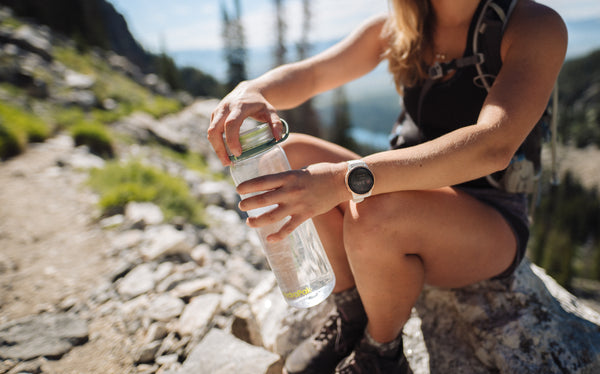
Water bottle pros
1. You can see what you have left
With a clear bottle such as the HydraPak Recon, checking your remaining water takes about half a second. That makes it much easier to decide whether you need to refill before heading further down the trail.
2. Great for electrolyte mixes
Wide bottle openings make powders and drink mixes easy to add. They are also convenient when you want to keep electrolytes separate from your main water supply.
3. Easy cleaning
Bottles generally have fewer components, so there is less to dismantle and scrub. That simplicity is particularly useful if you regularly use flavoured drinks or electrolytes.
4. Straightforward refilling
Pull it out, take off the cap and fill it. There is very little fuss, whether you are at a tap, campsite or suitable natural water source.
Water bottle cons
1. Drinking can interrupt your pace
If the bottle is inside your pack, drinking may mean stopping and taking it out. That gets old quickly on long hikes or rides.
2. Hard bottles stay hard
A rigid bottle still takes up the same amount of room when it is empty. Flexible options such as Flux and Stow solve that problem by collapsing down as you drink.
3. Weight
Some rigid bottles are heavier than soft bottles or reservoirs. Once you add the weight of the water itself, every unnecessary gram starts to become more noticeable.
4. Sloshing
As the bottle empties, the remaining water has more room to move. Cue the soundtrack of half a bottle sloshing around with every step.
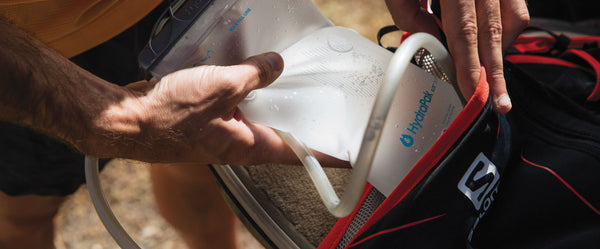
Hydration bladder pros
1. Plenty of capacity
Reservoirs come in different sizes for different trips.
HydraPak's Contour range, for example, includes capacities up to 3 L.
That makes bladders useful when you want a larger supply without carrying multiple bottles.
2. Drink while moving
A bite valve and drinking tube let you hydrate without stopping or removing your pack.
For hiking, mountain biking or long days outdoors, this is one of the biggest advantages.
3. Comfortable pack integration
A reservoir sits flat against your back rather than taking up a cylindrical chunk of pack space.
Baffled designs such as the Contour are also designed to maintain a slim, stable profile as you move.
4. Hands-free
No reaching around for a bottle.
Just grab the valve and drink.
That is particularly handy when cycling, using trekking poles or carrying other equipment.
5. Space efficient
A soft reservoir changes shape as the water disappears, helping make better use of available pack space.
Hydration bladder cons
1. Harder to check your remaining water
The reservoir is usually hidden inside your backpack, so you cannot simply glance at it.
You may need to open your pack or judge the remaining volume by feel.
2. More cleaning components
The reservoir body itself is easier to clean than many people think. Most HydraPak reservoirs are reversible and top-rack dishwasher safe.
The tube and bite valve need more attention, and HydraPak recommends cleaning the tube with a dedicated brush.
3. Warm water
A reservoir carried close to your back can warm gradually, especially in Australian conditions.
An insulated reservoir can help slow temperature change if cold water matters to you.
4. Not designed for guzzling
Bite valves are made for frequent sipping rather than knocking back half a litre in one go.
If you are firmly in the big-drink camp, a bottle may suit you better.
Bottle or bladder: which should you choose?
Pick a bottle if you want straightforward cleaning, easy refilling and a clear view of how much water remains.
Pick a bladder if you want hands-free hydration, larger capacity and easy drinking while you move. And there is absolutely no rule saying you cannot use both. A hydration reservoir paired with a collapsible bottle can give you convenient drinking on the move plus extra capacity when you need it.
Team Bottle and Team Bladder may have to learn to coexist.
FAQ
Is a hydration bladder better than a water bottle for hiking?
A hydration bladder is usually more convenient for drinking while moving, while a bottle is easier to refill, inspect and clean.
What size water bladder is best for hiking?
Capacity depends on your route, weather and access to water. A 1.5 L to 2 L reservoir suits many outings, while 3 L may be useful for longer or drier routes.
Are hydration bladders easy to clean?
Modern HydraPak reservoirs are generally reversible and dishwasher safe. Tubes and valves need separate cleaning, usually with a tube brush. HydraPak AU
Do water bladders make water taste strange?
A clean, well-maintained reservoir should keep water tasting fresh. Regular rinsing, drying and deeper cleaning after flavoured drinks helps prevent residue and odours.
Can you carry a bottle and water bladder together?
Absolutely. Using a bladder for your main supply and a bottle for electrolytes or extra capacity can be a very practical setup.


